Animals enter uncapped or damaged flues because a warm, sheltered vertical shaft resembles a hollow tree. In San Mateo the common cases are chimney swifts and other birds building nests in spring, and raccoons denning…
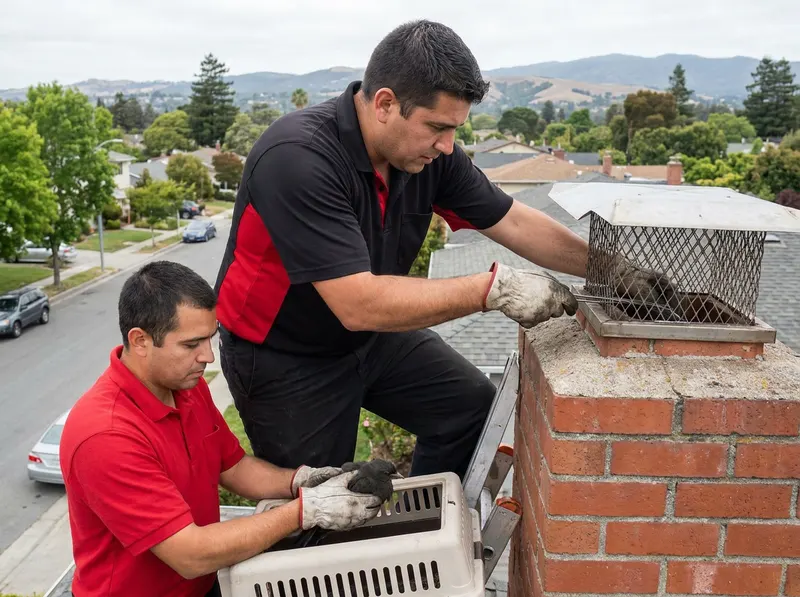
Animals enter uncapped or damaged flues because a warm, sheltered vertical shaft resembles a hollow tree. In San Mateo the common cases are chimney swifts and other birds building nests in spring, and raccoons denning in wider masonry flues on older streets like Baywood and North Central. A bird trapped in the smoke chamber can often be freed from below; a nest wedged in the flue is removed from the top with rods and a specialized brush, then the chimney is cleaned out so no material remains to re-ignite or block the draft. NFPA 211 flags an obstructed flue as a fire and carbon-monoxide hazard, which is why the cleanout after removal matters as much as the removal itself.
Deciding between a simple removal and a removal-plus-guard depends on why the animal got in. If the cap is intact and an animal slipped past a gap, removal alone may resolve it. If the flue is open at the top, common on unmodified mid-century homes around Hillsdale, Beresford, and Shoreview, a spark arrestor with mesh is the physical barrier that keeps future animals out. The recognized standard is a custom, ideally 316 stainless mesh animal spark arrestor: 316-grade stainless resists the Bay Meadows and Marina Lagoon salt-air corrosion that pits cheaper galvanized screens within a few years, and mesh openings between 5/16 inch and 3/4 inch block embers and animals while still passing exhaust. A custom chimney animal guard is fabricated to the flue's outside dimensions so it seals the full opening rather than sitting loose.
Raccoons are the harder case. To keep the raccoons out of a chimney, the animal and any kits must be confirmed gone before capping, sealing an active den traps the animal and creates a worse problem. Removal is scheduled around the animal's exit, then the flue is cleaned and a heavy-gauge 316 stainless guard is installed, since raccoons can bend light screens. Homeowners in Sugarloaf and Hayward Park with wood-burning fireplaces heading into cold season commonly pair the guard install with a Level 1 inspection so the flue is verified clear before the first fire. A Level 2 inspection, which the Chimney Safety Institute of America (CSIA) describes as including video scanning of the flue interior, is appropriate when animal activity suggests possible liner damage.
The process runs in order: inspect the top and firebox to confirm what is inside; remove the bird, nest, or animal; clean out the chimney of nesting material and soot; measure the flue opening; and fit the custom mesh arrestor. A free on-site estimate documents the flue size and condition before any figure is quoted, so homeowners can get some quotes and compare on the same measurements. Photos of each step are provided, including an honest verdict when no repair is needed.
Every job gets a firm, written price after a free on-site visit.
Tell us about your animal removal & spark arrestor job in San Mateo and we'll send a clear, written quote, usually the same day.
 Sweepking Chimney Sweep